The Five Focus Materials
R2v3 names five focus materials that get special tracking: PCBs, mercury, CRT glass, batteries, and circuit boards. Here's why each one matters.
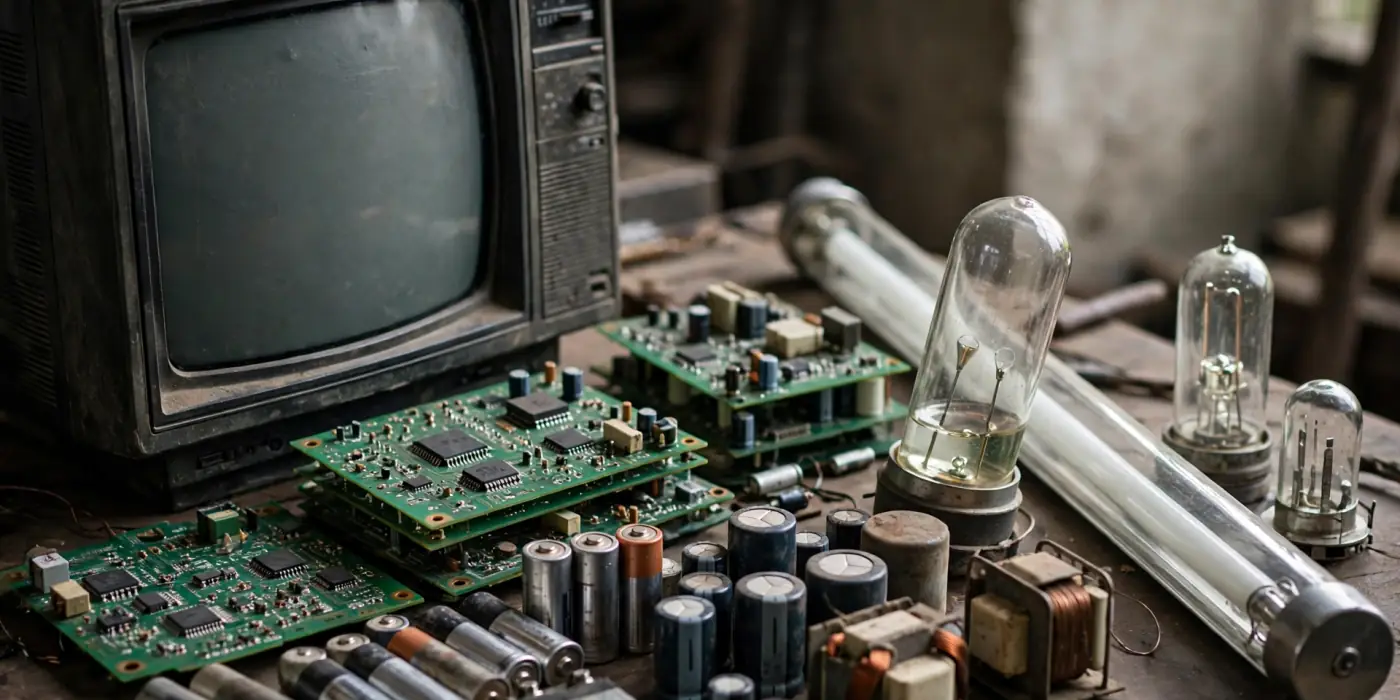
Not every material in an old device gets the same treatment under R2v3. The standard names five “focus materials” — the ones that carry the most risk if they’re mishandled, and therefore the ones that get the closest tracking from intake to final disposition. If you’ve ever wondered why a recycler asks detailed questions about certain items, this is usually why.
(As with our other standards posts, this is our educational summary, not SERI’s official interpretation.)
The five
- Polychlorinated biphenyls (PCBs). First, a naming trap worth clearing up: in R2v3, PCB means polychlorinated biphenyls, a family of toxic chemicals once used in older capacitors and transformers — not printed circuit boards (which are a separate focus material below). PCBs are persistent in the environment, so anything that might contain them has to be identified and routed to vendors equipped to handle them.
- Mercury. Found in switches, relays, and some lamps and older devices. It’s toxic in small amounts, so mercury-bearing items need contained handling and vendors who can recover or dispose of it safely.
- CRT glass. The glass from old tube televisions and monitors contains lead. It’s heavy, it breaks, and it can’t go through the same stream as ordinary glass — it needs a downstream path built for leaded glass.
- Batteries. Lithium and other battery chemistries pack a lot of energy into a small package, which makes damaged or mishandled batteries a fire risk. They also contain valuable and hazardous materials, so they get sorted, stored, and shipped under specific rules.
- Circuit boards. The printed boards inside nearly every device carry precious metals worth recovering — and hazardous substances that have to be managed properly. Boards are where the value and the risk sit side by side, which is why their downstream path gets documented so carefully.
Why the tracking matters
These five are the materials that trigger the closest downstream scrutiny. Under R2v3, a facility has to know which vendors receive its focus materials, keep those vendors qualified and documented, and be able to show the chain of custody. That’s the same downstream diligence we follow for everything that leaves our dock — it just bites hardest here, because these are the materials where a careless handoff does the most harm.
We maintain qualified downstream vendors for every material stream we handle, re-verified on a regular cycle, with the paperwork to prove it.
What this means for you
When you hand equipment to a recycler, the focus materials inside it are the real test of that recycler’s system. A facility that can tell you where its batteries, boards, and CRT glass go — and show the documentation — is a facility that’s taking the standard seriously.
Schedule a free pickup or see what we accept to get started.