A Day at Our Meridian Facility
Follow a load of retired equipment through our Meridian facility — from weighing and sorting to data destruction, testing, and reuse.
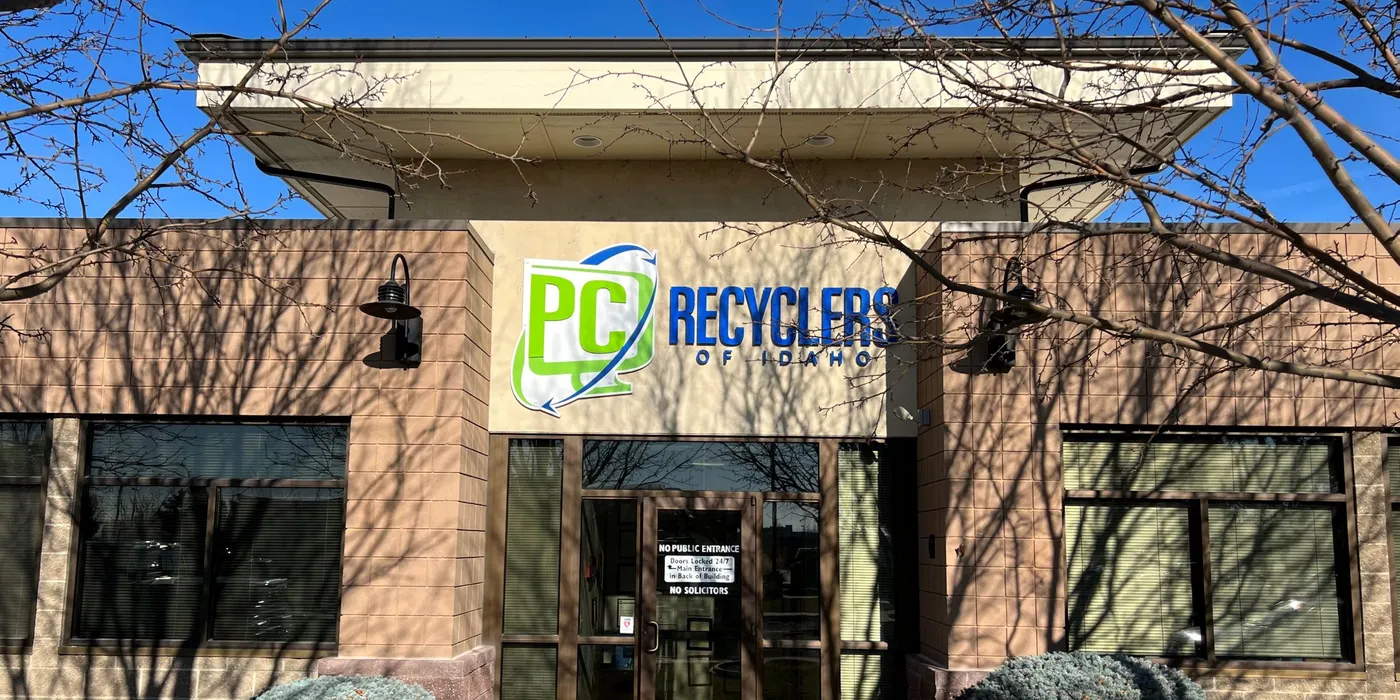
When a business in the Treasure Valley retires a room full of computers, the equipment usually arrives at our Meridian facility in one load: desktops, monitors, laptops, servers, and the tangle of cables that went with them. Here’s what happens to it once it comes through our doors.
Weighing and sorting
Every load starts on the scale. Once it’s weighed, the load gets sorted through. The first thing we’re looking for is the data-containing devices — hard drives, SSDs, phones, anything that can hold company records. Those get pulled out and set aside for data destruction. The rest gets sorted into reuse, repair, or recycle: gear in good shape and ready for a second life, gear that needs a part — a failed power supply, a worn battery, a cracked screen — and gear that has reached the end of its useful life.
Sorting is where the R2v3 reuse hierarchy does its work: reuse comes before repair, and repair comes before recycling. A working laptop that can go straight back into service is the best outcome. One that needs a part is the next best. Only equipment that can’t be reused or repaired gets broken down for materials recovery.
Once everything is sorted, it gets checked in — the data-containing devices are logged with where they came from, so each one can be tracked through the rest of the process. That record is part of what our R2v3 certification requires: if a device later turns up somewhere it shouldn’t, we can trace it back.
Data destruction
Once the data-containing devices are pulled out, they go through our sanitization process: a three-pass wipe that exceeds the NIST 800-88 Clear standard, or the Rev. 2 Purge method — such as cryptographic erase — when the device supports it. Media that can’t be wiped or purged is physically destroyed.
Data destruction happens before anything moves on to testing or reuse for a simple reason: a drive that still holds company records should never leave the facility — or sit on a test bench — with data still on it. By clearing that risk early, everything downstream — testing, repair, recycling — can happen without worrying about what’s still on the disks. Both methods satisfy HIPAA’s disposal requirements, which is why healthcare offices trust us with their retired equipment too.
Testing and a second life
Equipment bound for reuse goes to our test bench. Under our Appendix C test-and-repair scope, we check that devices actually work before they leave — not just that they power on, but that they’re genuinely fit for their next owner.
The equipment that passes finds its next home — it’s either resold or donated. Either way, it stays in use instead of becoming waste — and the business that retired it can be confident its data was destroyed and its equipment was handled under certified processes.
The short version
Weighing, sorting, check-in, data destruction, testing, reuse. That sequence is the same whether the load is a dozen laptops from a small office or a full truck from a larger refresh. If your business has equipment to retire, our free pickup service is available for businesses — or you can drop off during business hours. Either way, it starts with a load coming through the doors, and ends with equipment reused, repaired, or responsibly recycled.